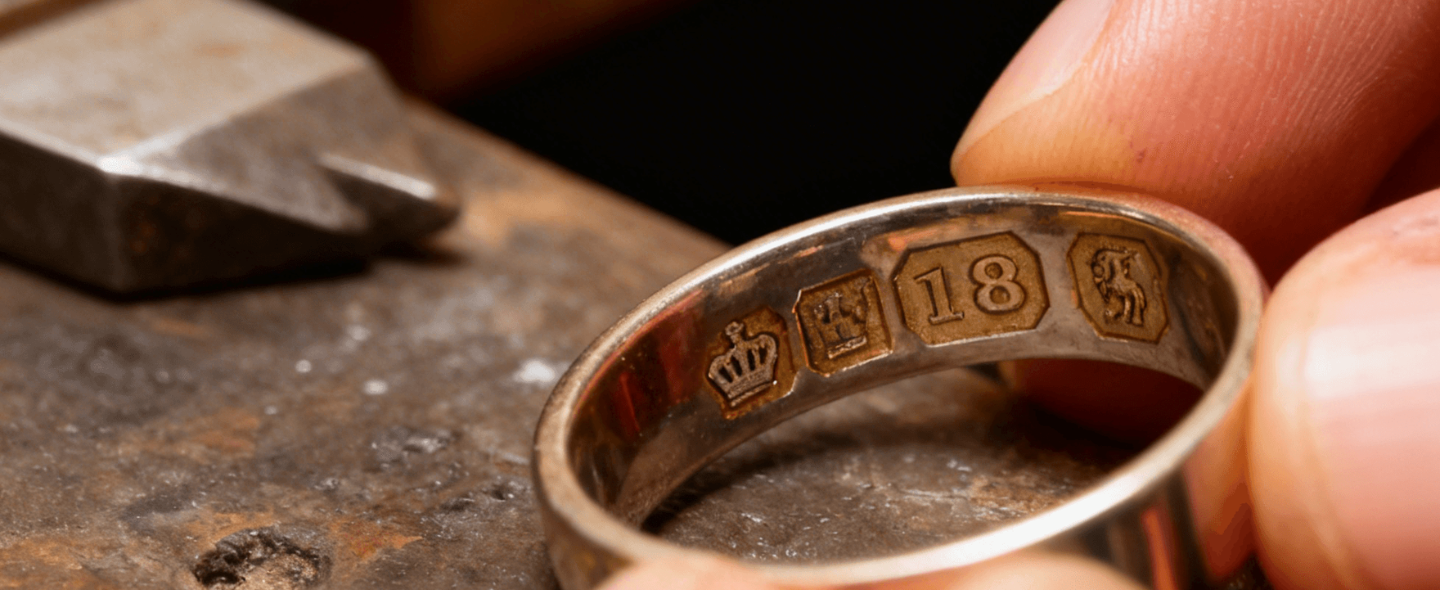
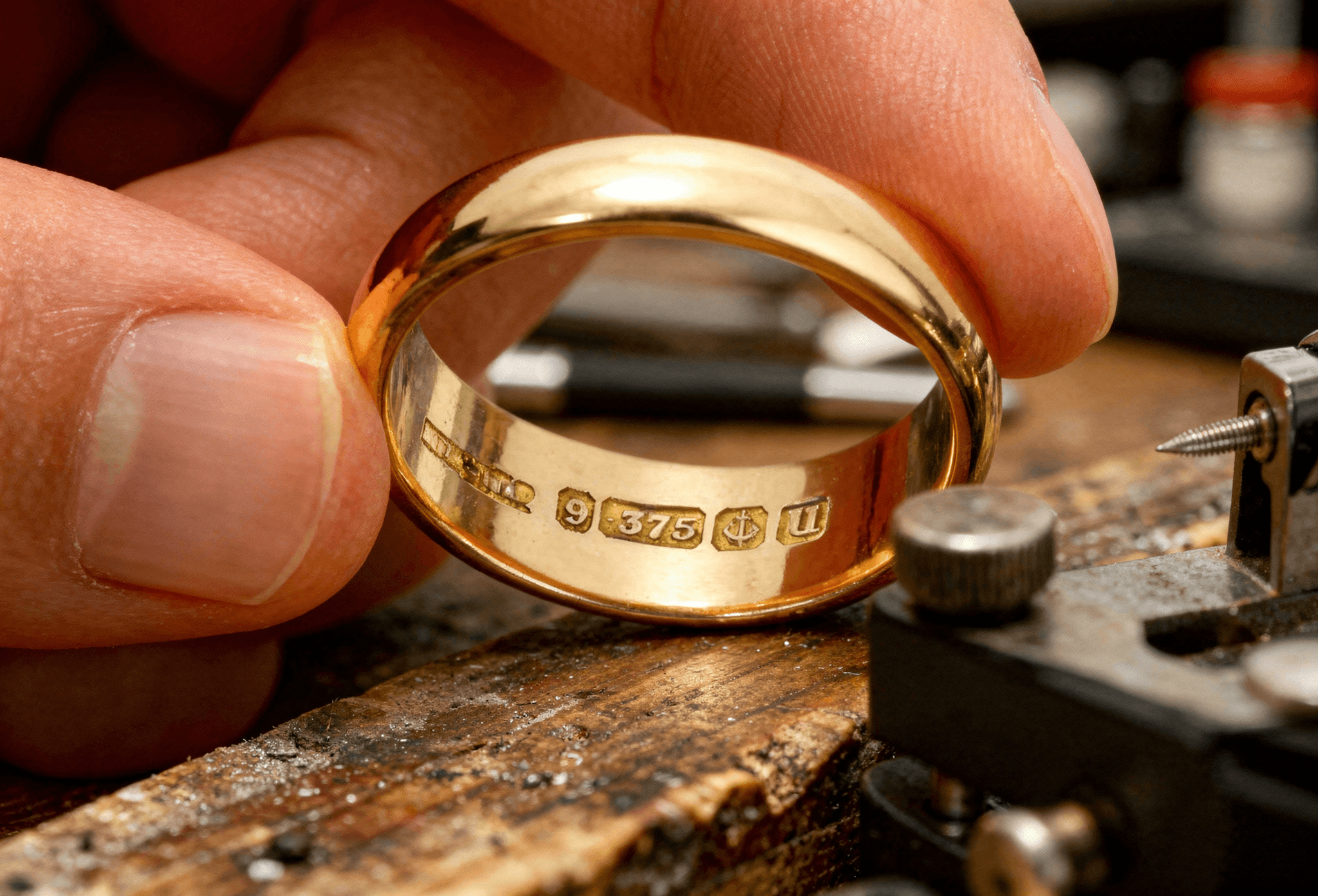
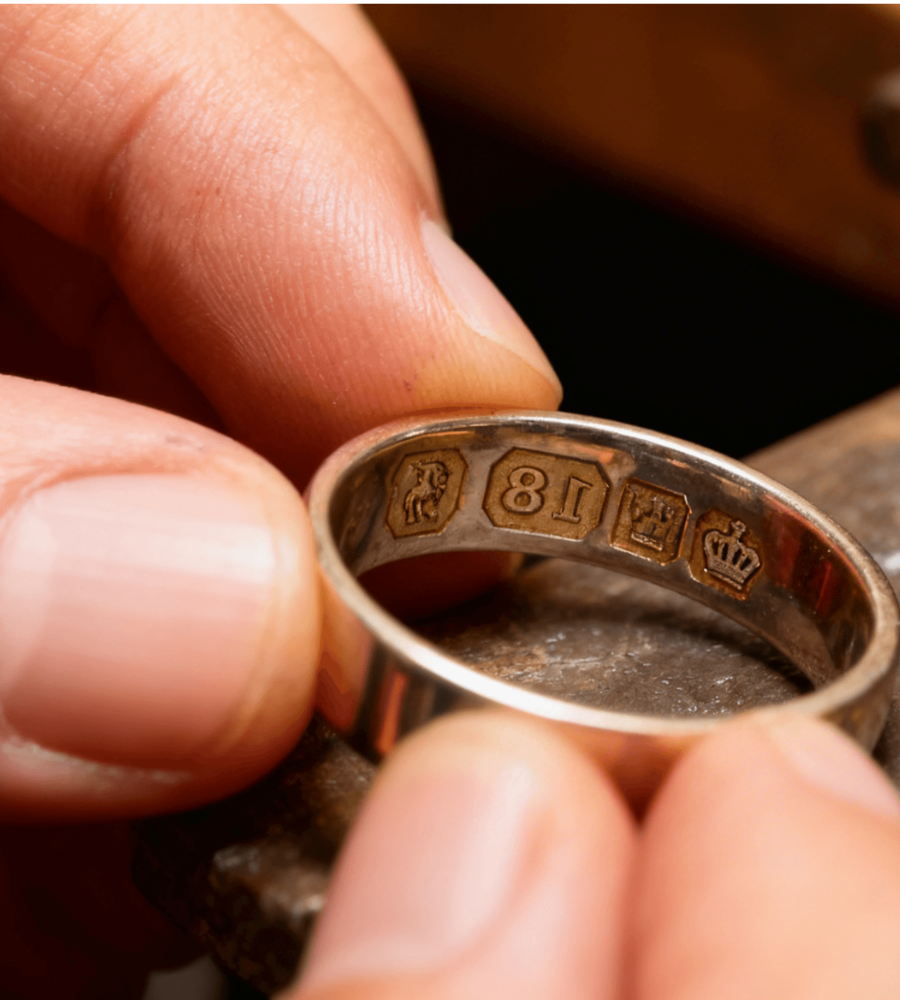
Ett modernt kännetecken är inte bara en stämpel; det är en obligatorisk uppsättning av tre märken som arbetar tillsammans för att ge full spårbarhet. När du ser ett Birmingham-kännetecken kommer det vanligtvis att bestå av:
1. Sponsorns märke
Detta är det unika märket för företaget eller personen som skickade artikeln för märkning. Det består vanligtvis av initialer inuti en sköld eller gräns. På Weston Beamor kan vi använda ditt eget registrerade sponsormärke, eller så kan du använda vårt för att förenkla processen.
2. Standarden för finhet
Detta berättar konsumenten ädelmetallinnehållet. Det representeras av ett numeriskt värde i en specifik form:
Guld (mätt i karat)
9ct guld: 375
14ct guld: 585 (En populär standard i USA och Europa)
18ct guld: 750
22ct guld: 916
24ct guld: 999 (Rent guld)
Silver
800 Silver: 800 (Vanligt i vintage europeiskt bestick)
Sterling silver: 925 (Den vanligaste standarden för smycken)
Britannia Silver: 958 (En högre renhet som ofta används i dekorativa bitar)
Platina
Platina: 950 (Lyxstandarden)
Fin platina: 999
Palladium
Palladium 500: 500 (En mer budgetvänlig legering)
Palladium 950: 950 (Standarden för högkvalitativa band)
3. Analyskontorets märke
Det är här Birminghams kännetecken kommer in. Ankaret betyder att metallen testades (analyserades) av experterna vid Birminghams analyskontor.
Valfria traditionella märken
Du kan också se ett datumbrev (identifierar året för hallmarking) eller ett bildmärke (som Lion Passant för Sterling Silver). Även om dessa inte längre är lagligt obligatoriska, inkluderar många designers dem för att lägga till en känsla av arv och fullständighet till sina bitar.